
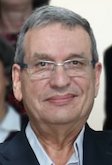
Rodrigo Martins is a Full Professor at FCT NOVA and an internationally recognized expert in advanced functional materials for electronics and energy applications. He has authored more than 1,375 scientific publications, which have received over 44,500 citations, resulting in an h-index of 105.
He currently serves as President of the European Academy of Sciences, Director of the Associated Laboratory i3N (Institute of Nanostructures, Nanomodelling and Nanofabrication), President of the Board of the Portuguese Advanced Materials Cluster (NANOMAT), and member of the Board of the Portuguese Batteries Cluster (BatPower). He is also Chair of European Affairs for the European Materials Research Society (E-MRS) and Editor-in-Chief of the journal Discover Materials.
Professor Martins coordinates EMERGE (Emerging Printed Electronics Research Infrastructure), the first European research infrastructure dedicated to technologies beyond silicon.
He is a member of several prestigious academies and professional organizations, including the Academia Europaea, the Royal Academy of Sciences and Arts of Barcelona, the Portuguese Academy of Engineering, and the Portuguese Order of Engineers. He serves on the Advisory Board of the European University for Customized Education (EUNICE) (2025–2027) and on the Editorial Board of Innovation Materials (2025–2027).
His international distinctions include serving as Co-Chair of the FNRS Quinquennial Scientific Prize – A. De Leeuw-Damry-Bourlart Prize in Applied Exact Sciences (Belgium). He holds appointments as Qiushi Chair Visiting Professor at Zhejiang University, Honorary Professor at the Hefei Institutes of Physical Science, Chinese Academy of Sciences, the Technical University of Wuhan, Wuhan University, and Fuzhou University, and as Invited Professor at Southwest University, Chongqing.
In 2023, he was selected as a PIFI Distinguished Scientist by China, and in 2025 he received the prestigious Chinese Government Friendship Award.
Previously, Professor Martins served as President of the International Union of Materials Research Societies (IUMRS) and was a member of both the Scientific Council of the European Research Council (ERC) and the Advisory Council of the European Commission’s Directorate-General responsible for the Horizon Europe Programme.

Catherine Debiemme‑Chouvy is a senior researcher (Directrice de Recherche, DR2) at the Laboratoire Interfaces et Systèmes Électrochimiques (LISE), affiliated with Sorbonne Université and CNRS in Paris. She completed her studies in biology and biochemistry, followed by a DEA in Analytical Chemistry and a PhD in Analytical Chemistry. Since 1990, she has held various research positions at CNRS, advancing to her current senior status. Her research focuses on electrochemistry and surface/interface science, including the electrosynthesis and characterization of nanostructured conductive polymer films, surface modification of semiconductor electrodes, development of carbon-based materials for water decontamination, and electrochemical energy storage materials. She has authored over 100 peer-reviewed articles, several book chapters, holds multiple patents, and actively contributes to institutional leadership, serving as Deputy Director of LISE and participating in national CNRS committees.
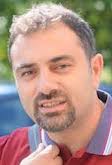
Filippo Giubileo is a Research Director at the Institute for Superconductors, Innovative Materials and Devices (SPIN) of the Italian National Research Council (CNR). He has over twenty years of experience in experimental condensed matter physics, with a strong focus on superconductivity, quantum transport, low-dimensional materials, and nanoscale devices. His research activities span advanced electrical and optoelectronic characterization, field emission, and the study of hybrid and quantum materials for next-generation electronics and sensing applications.
Dr. Giubileo has authored more than 160 peer-reviewed publications, with an H-index of 40. His work has been published in leading journals such as Advanced Functional Materials, Small, Physical Review Letters, and Materials Horizons.
Dr. Giubileo has coordinated national and international research projects, serves as evaluator for several funding agencies, and is actively involved in scientific governance and technology transfer. He also organized several international events such as ISMN’08, SM-2010, S4E-2014, GM-2016, TTN-2018, Nano-M&D-2019, IEEE NMDC 2023.
Keynote talk title: Low-Dimensional Materials Enabling Next-Generation FETs, Sensors and Emitters

Dr. Veronica Granata is a highly productive physicist at the University of Salerno and a member of the INFN (Istituto Nazionale di Fisica Nucleare) Gruppo Collegato di Salerno research group, where she is involved in advanced condensed matter and gravitational‑wave related research. She has authored over 220 scientific publications on topics including superconductivity, crystal structure, X‑ray diffraction, magnetic materials and material characterization, with several thousand citations reflecting her impact in these fields.
Dr. Granata has participated in national and institutional research projects, including coordinating a funded project on superconducting devices for quantum technologies at the University of Salerno. She is also locally principal investigator for the Einstein Telescope (ET) initiative — a major European collaboration focused on next‑generation gravitational wave observatories — through the INFN Salerno group.
She is active in the scientific community through organizing and serving on scientific committees for international conferences, such as materials, solidification and energy efficiency workshops hosted at UNISA – for example the “Technologies and Innovative Solutions for Energy Efficiency” workshop — and other physics symposia. While specifics of her editorial roles are not prominently listed in public profiles, her senior research standing and extensive publication record indicate involvement in peer review and academic peer engagements. Her work bridges fundamental materials physics and large‑scale collaborative physics experiments, contributing to both teaching and research at national and European levels.

Dr. Aziz Genç obtained his PhD in Materials Science from the Universitat Autònoma de Barcelona, Spain, in 2015, where his research focused on the nanoscale characterisation of plasmonic properties in hollow metal nanostructures using monochromated electron energy-loss spectroscopy (EELS) in a scanning transmission electron microscope (STEM). Following the completion of his doctorate, he held various academic positions in Turkey and the United Kingdom. Since April 2025, Dr. Genç has been a Senior Researcher in the Advanced Electron Nanoscopy Group at the Catalan Institute of Nanoscience and Nanotechnology (ICN2). His research activities centre on atomic-scale STEM-based characterisation of functional nanomaterials, with particular emphasis on energy-related applications, quantum materials, and emerging quantum devices. He has published over 70 research articles, which are cited more than 3500 times.

Prof. Carlo Barone is Associate Professor at the Department of Physics (University of Salerno, ITALY). From March 07, 2025 he has the National Scientific Qualification as Full Professor in the Italian higher education system for the disciplinary field of 02/B1 - Experimental Condensed Matter Physics. On February 29, 2008 he was awarded a Ph.D. in Physics (specialization Condensed Matter), at the University of Salerno. From December 16, 2002 to September 17, 2003 he has attended a Master in “Technologies and Applications of Computer Science for the Territorial Management (GIS)”, at the International Institute for Advanced Scientific Studies – Vietri sul Mare (SA). On July 18, 2002 he graduated in Physics (specialization Geophysics), at the University of Salerno, with an evaluation of 110/110 points.
Most of his scientific and professional activity has focused on the elaboration of stochastic signals originated by non-equilibrium processes in innovative materials and devices (electric noise measurements), giving him the possibility to publish more than 100 papers in international scientific journals. Actually, he is a member of the Editorial Board of Scientific Reports (a journal from Nature Publishing Group).
Regarding the scientific responsibility in research projects, he is currently the Head of the Local Unit (Sezione di Napoli – Gruppo Collegato di Salerno) inside the Project entitled: “QUantum ARchitectures for Theory & Technology (QUART&T)”, funded as National Experiment by the National Institute for Nuclear Physics (INFN). He, also, has been Associated PI and Head of the Local Research Unit (UNISA) inside the Project entitled: “Development of two-dimensional environmental gas nano-sensors with enhanced selectivity through fluctuation spectroscopy (2DEGAS)”, funded on Bando PRIN 2022 PNRR – Progetti di Ricerca di Rilevante Interesse Nazionale (from November, 2023 to November, 2025). Moreover, he has been Coordinator and Principal Investigator of a national “Seed” Project entitled: “Is weak localization detected by 1/f noise?”, funded by the CNR-SPIN Institute from April, 2012 to February, 2013.
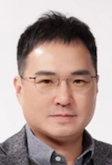
Gwan-Hyoung Lee is a South Korean materials scientist and professor in the Department of Materials Science and Engineering at Seoul National University, known for his pioneering research on two-dimensional (2D) materials such as graphene and transition metal dichalcogenides. He earned his B.S. and Ph.D. from Seoul National University and gained industry experience as a senior engineer at Samsung Electronics before pursuing academic research, including postdoctoral work at Columbia University. His work focuses on the synthesis, characterization, and device applications of atomically thin materials, with major contributions such as the development of “hypotaxy,” a method for growing wafer-scale single-crystal 2D semiconductors. He has authored over 200 peer-reviewed scientific papers with tens of thousands of citations, and actively contributes to the academic community as a reviewer and guest editor for leading journals including Nature, Science, Nature Materials, Nano Letters, and ACS Nano. Through his research and service, Lee has significantly advanced next-generation electronics, optoelectronics, and energy-efficient semiconductor technologies, earning international recognition in nanoscience and materials engineering.

Dr. Palmerina González-Izquierdo is a Marie Skłodowska-Curie Postdoctoral Fellow at Universidad de Cantabria (Spain). She holds a Ph.D. in Science and Technology from the Institut Laue-Langevin (France) and Universidad de Cantabria, where she specialized in the synthesis and characterization of hybrid organic-inorganic materials using neutron and X-ray scattering techniques. Her doctoral work was recognized with the AFC PhD Award (2024) and the Xavier Solans–Bruker Award (2021).
Following her PhD, she worked as a postdoctoral researcher at CEA-Leti (France), focusing on the advanced characterization of defects in semiconductor materials and devices for optoelectronics and power electronics.
Subsequently, she joined Universidad de Cantabria as a postdoctoral researcher, later obtaining a Marie Skłodowska-Curie fellowship. Her current research focuses on the atomically precise synthesis and advanced characterization of graphene-based nanoarchitectures with tailored electronic and magnetic properties.